


A newsletter is an email sent to subscribers with company news, offers, or useful information. Its purpose is to stay in touch with your audience, encourage engagement, and remind people of your brand.
Newsletters are most often received by existing customers, potential buyers, or people interested in the company’s activities. Each newsletter usually has one clear topic, from a special offer to a useful article.
Email marketing, and newsletters in particular, help businesses not only increase sales but also:
- Build trust in your brand
- Bring visitors back to your website
- Encourage repeat purchases
- Maintain an ongoing relationship with your audience
That is why newsletters remain one of the most effective digital marketing tools.
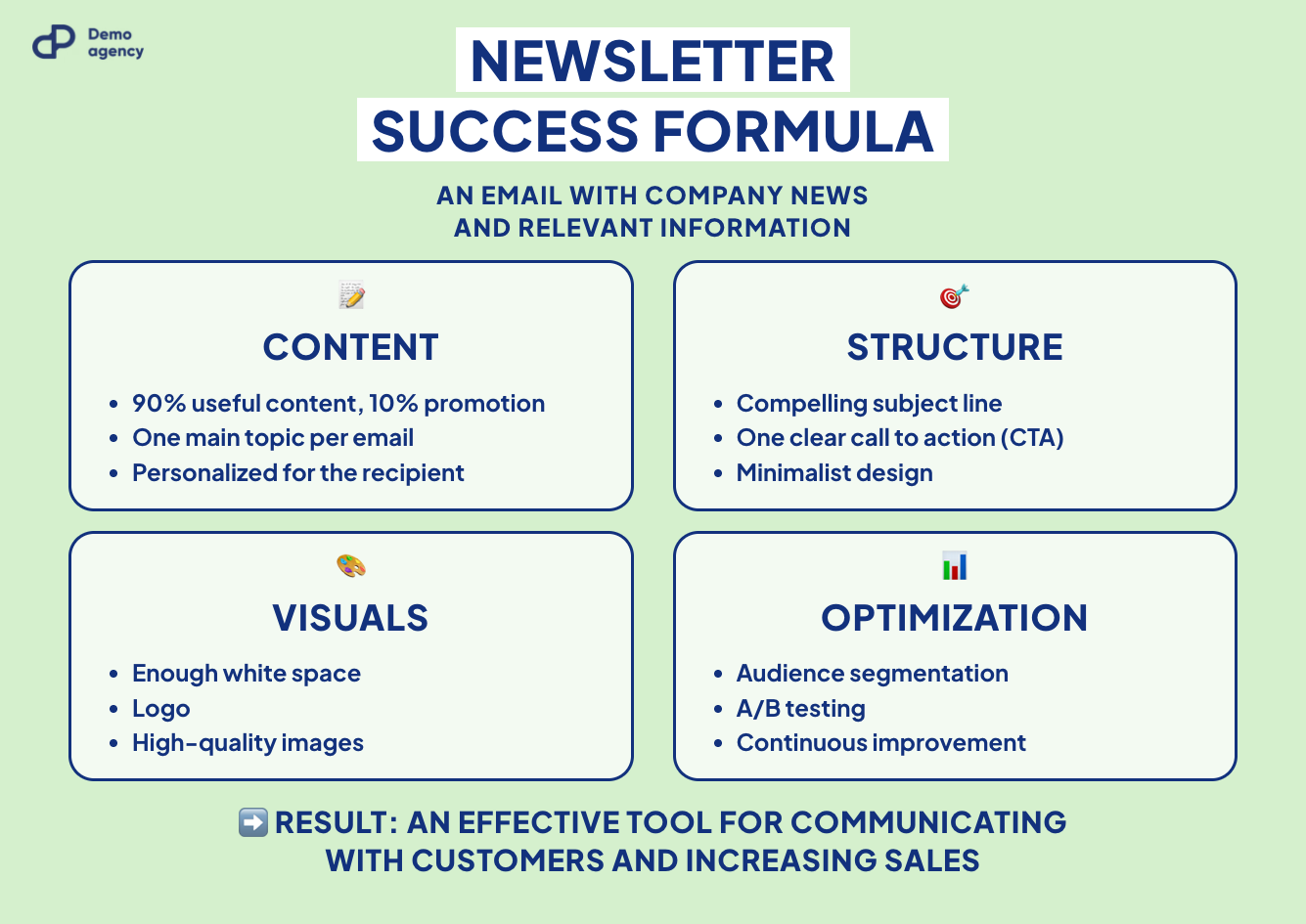
Table of contents
What are the benefits of newsletters?
Newsletters are a form of email marketing in which companies send informational and promotional messages to their current, former, or potential customers.
Email is one of the most direct ways to reach customers, and newsletters make it possible not only to deliver the most important information but also to build a stronger relationship with your audience. But what specific benefits do they bring to your business?
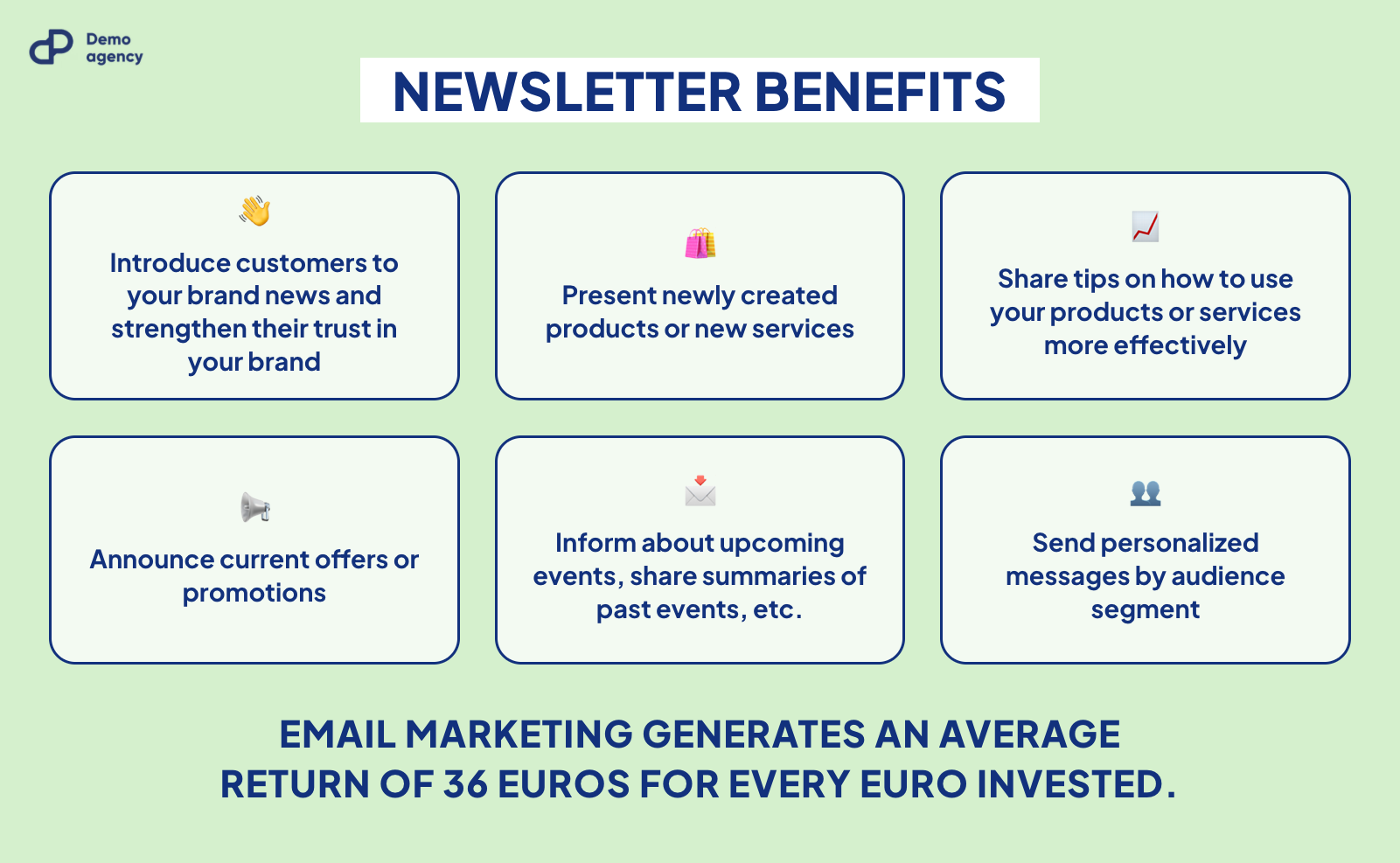
- Introduce customers to your brand news and strengthen their trust in your brand – make sure your newsletters are regular, but not too frequent. Share not only news but also behind-the-scenes information, e.g., how you create your products or what values you uphold. This helps build a closer relationship with your audience;
- Present your new products or new services – high-quality photos, short demo videos, or infographics are important. Emphasise the benefits of the product or service;
- Offer tips on how to use your products or services more effectively – this creates value; don’t forget customer reviews and real examples of how your products are used;
- Announce current offers or promotions – use the FOMO (fear of missing out) effect and emphasise a sense of urgency with headlines and content such as “Last chance” or “Only 4 hours left”;
- Inform about upcoming events, provide recaps of past events, etc. – when promoting upcoming events, include registration links or invitations, and after the event share the most memorable moments;
- Send personalised messages based on audience segments – e.g. interests, purchase history or demographics. Personalised emails have a 29% higher open rate and a 41% higher click-through rate;
Thanks to low costs and a high return on investment, newsletters are one of the most effective marketing tools for growing your business. According to research, email marketing generates an average return of 36 euros for every euro invested.
How to create a newsletter and an effective email marketing plan?
First of all, a good newsletter contains plenty of unique and important information or useful tips, presented in a more attractive way.
The secret behind most successful newsletters is the tone of voice: it is simple and gives the impression of talking to a friend, as if a good acquaintance had sent you information they thought you would find interesting.
Do you think the newsletters you send are not effective? Or perhaps you want to try newsletters with a completely new structure, change the tone, etc.? Here are our tips on what to do.
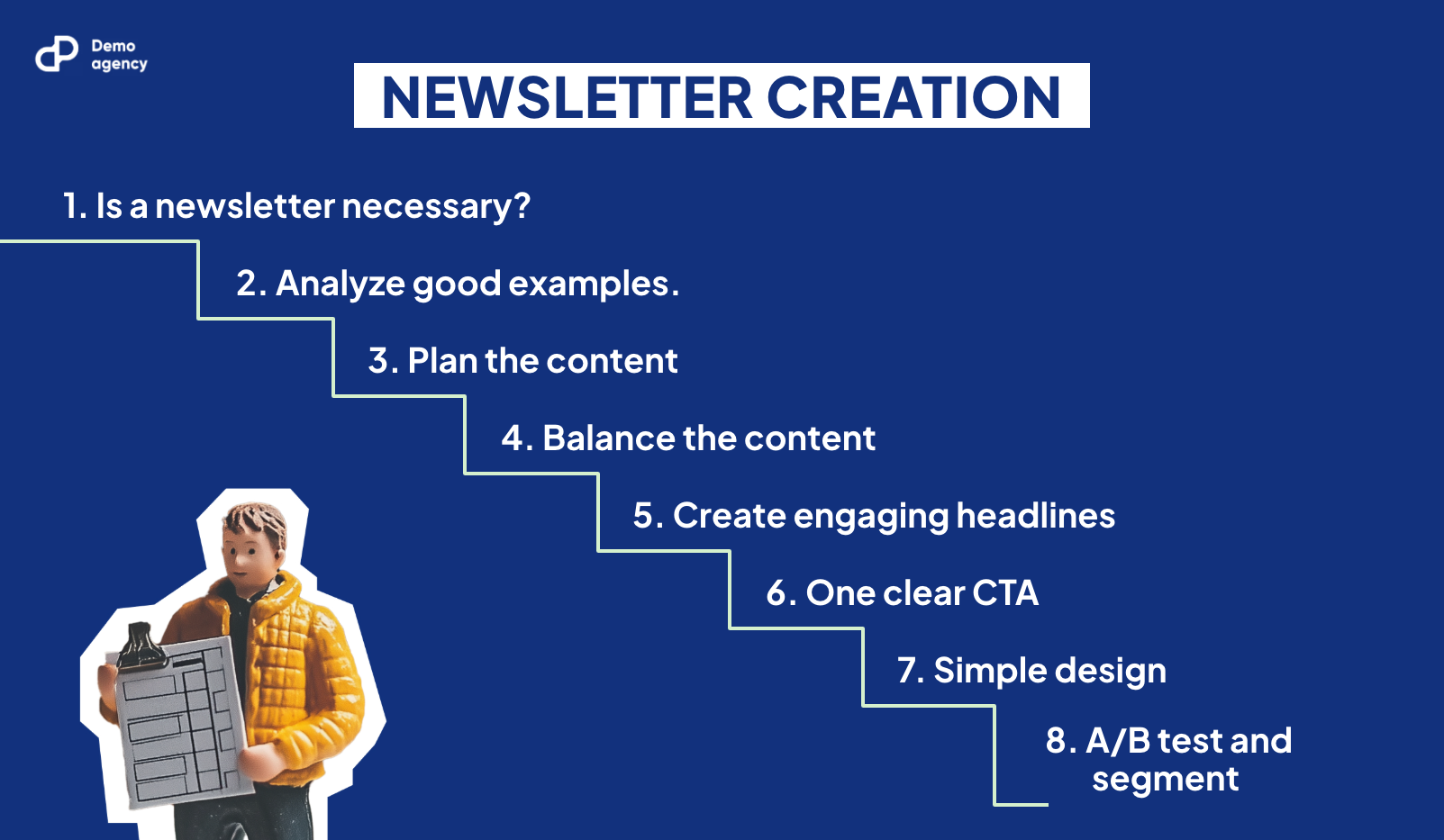
1. Decide whether your project needs a newsletter at all
It has to be admitted that a newsletter is not always, and not for every business, the right marketing tool.
For example, customers of technical or manufacturing companies may simply not be interested in newsletters, so it is better to spend this time on other marketing tools – for example, write blog articles or share content on social media.
So first assess whether you need a newsletter at all and do some quick research. Are there any companies in your sector whose news people subscribe to by email? What information do they provide?
Then take another look at your business goals: will you use newsletters to increase the number of potential customers, is the goal perhaps to sign more contracts or achieve more sales, or do you simply want to retain or educate existing customers?
2. Review examples of successful newsletters for design inspiration
Where to start? Newsletter creation usually begins with analysis – look through a few sample newsletters sent by companies in a similar line of business.
Subscribe to newsletters from your market in other locales. From each email, it is worth picking out the elements that caught your attention the most and that you liked. At the same time, you will see the topics that may interest your market’s audience.
3. Think through your newsletter content
One of the most common mistakes made when creating newsletters is that they are messy and unfocused because you try to cover every area of your business. For example, new products are presented alongside blog posts, then some success stories, and even a recap of the whole week. But such an email will look chaotic.
A newsletter needs one thematic focus – i.e., it should be dedicated to one specific topic. There is no need to try to target every reader audience.
For example, the media channel BuzzFeed sends a newsletter called “This Week in Cats”. Although BuzzFeed covers a very wide range of topics, this particular newsletter is aimed at people who have cats.
4. A balanced newsletter: its content and best practices
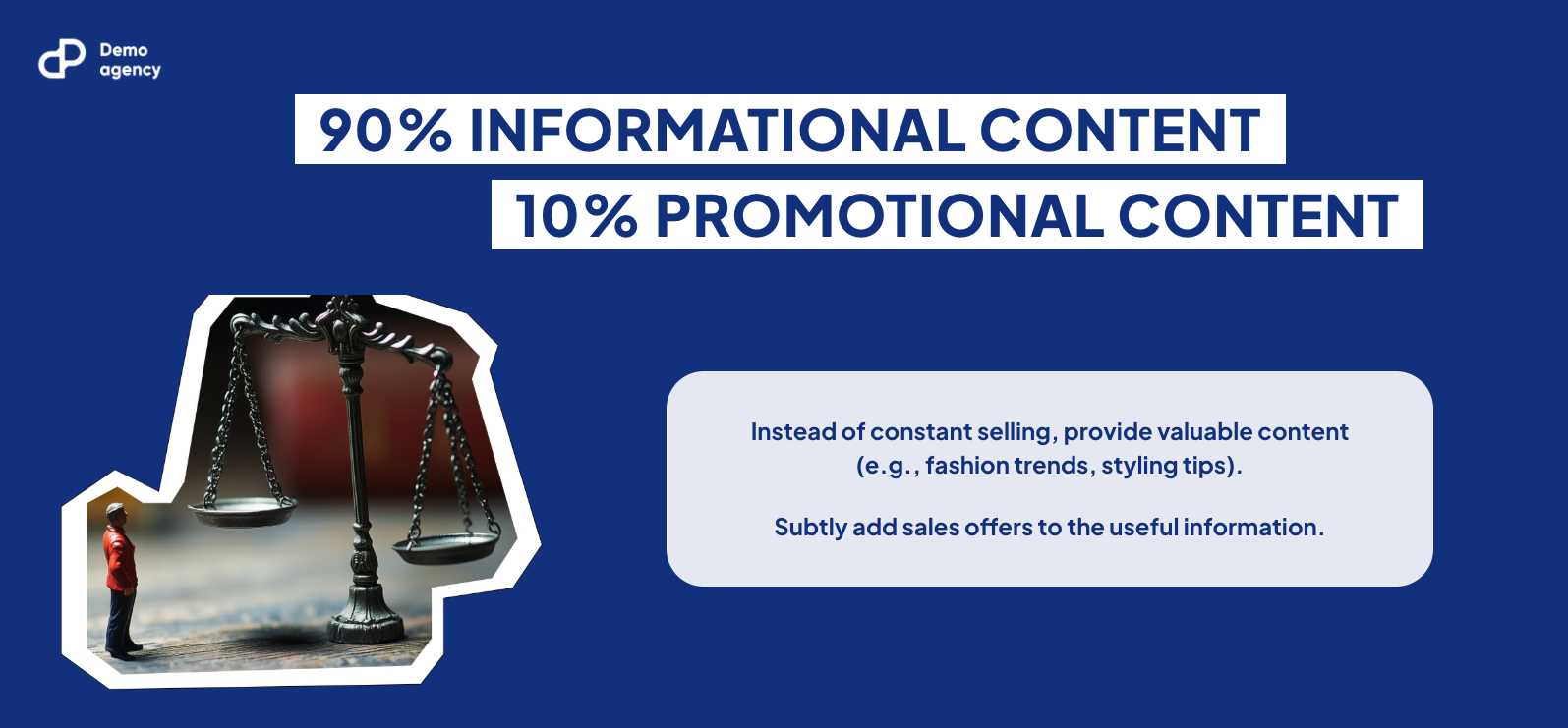
90% of the content should be informational and 10% promotional. Newsletter subscribers most likely do not want to read only about your products or services.
For example, if a clothing e-shop sends newsletters urging people to buy 3 times a day, recipients will quickly get annoyed and unsubscribe, or worse – report it as spam. These actions harm your email deliverability.
Try to prepare useful content: present this season’s fashion and trends, or how to combine certain garments, adapt them to different body types, etc. So promotional inserts can and should stay, but the priority is that readers receive relevant and timely information.
You cannot just start selling – first provide value to your audience, and then tie the promotion to the value you have provided.
5. Be creative when writing newsletter subject lines
Even if subscribers have signed up to receive your emails, there is no guarantee that they will open them as soon as they land in their inbox, or open them at all.
If the same text keeps repeating in the newsletter subject line, or if the headline does not encourage subscribers to open that particular email right now, you should not expect a high read rate.
A good tip is to create a new, creative, and catchy headline for every newsletter you send. If you are not feeling creative, another tip is to talk to AI or use subject line generators like this one for inspiration.

6. Choose one specific call to action for your newsletter
A good newsletter usually contains several content elements with a call to action. However, users should essentially be encouraged to take only one main action; the others should be less important, in the “if you have time” category.
The solution is to position the call-to-action button at the beginning of the newsletter, above all other information. If you add a multitude of buttons, the reader may not understand what to do.
7. Minimalist design, the most important information
Email marketing specialists advise not to overload newsletters with information: simply provide concise text, and leave enough white space when designing.
That empty space helps reduce visual clutter and makes it easier for people who open your newsletter on a mobile device to tap the right link.
Readers can be directed to your website or blog, where they can read more. In other words, readers should quickly sense in the newsletter what benefit they will get by clicking the “Learn more” or “Buy now” link.
8. Test and test again (A/B), and finally segment
Constantly monitor and test whether you are sending newsletters properly, and find out what specifically works in your business. Newsletter subscribers likewise prioritise different things.
So first prepare a template that incorporates all the best practices, and then experiment, adding various components to the newsletter and changing subject lines and email content with CTA buttons.
Finally – or better yet, from the very start – segment your audiences and send relevant information for different interests. Only you can answer how to segment properly; break down your business audiences, as they often consist of different groups of people.
Then all that remains is to observe readers’ reactions and interests and determine what they like more – bright, “loud” colours or softer ones, emails with humour, or a serious, professional tone.

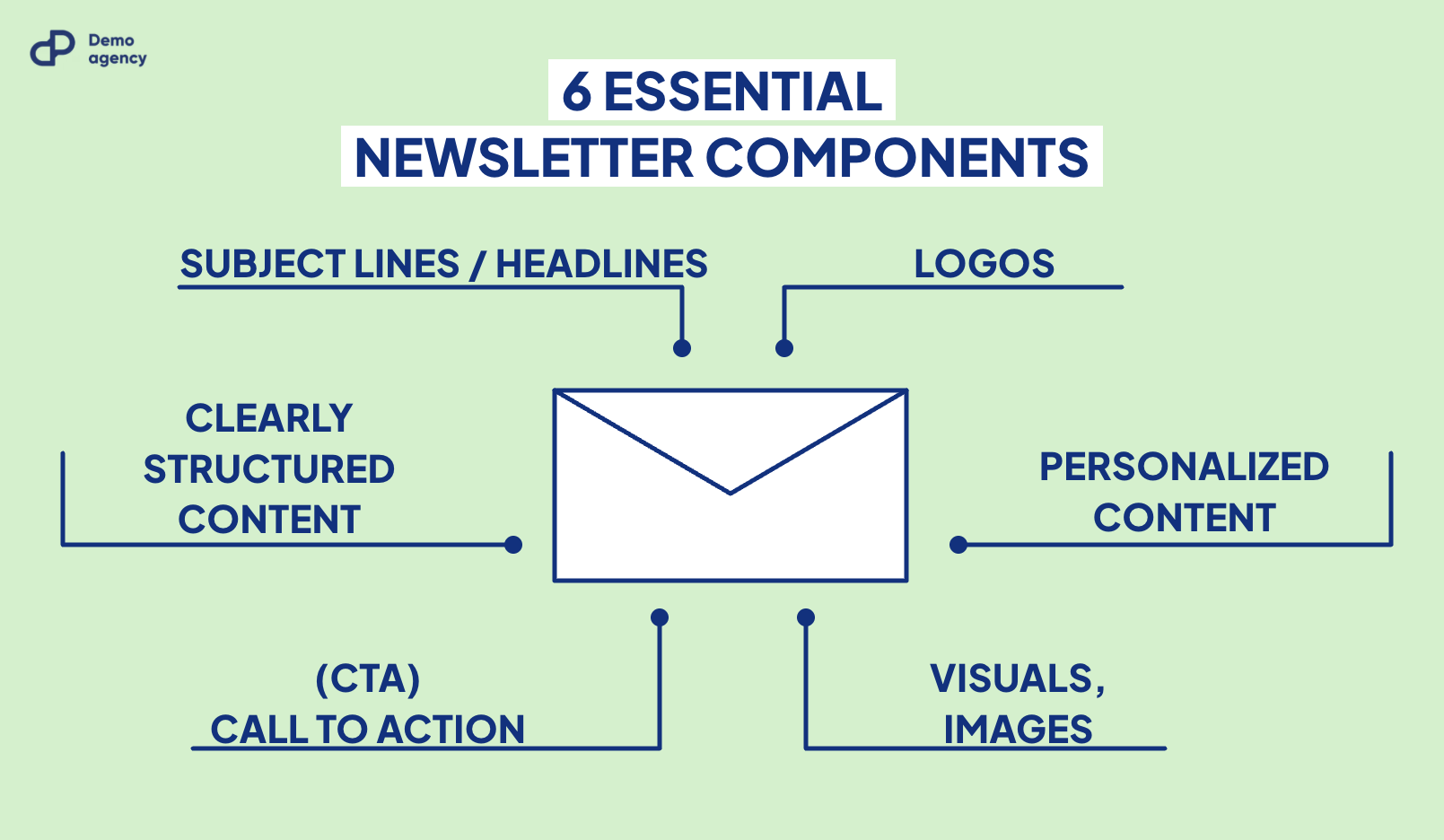
6 essential newsletter components
- Headlines / subject lines. Newsletters should have a headline that reflects your brand and encourages the audience to open that email.
- Logos. Your brand logo should be the guide that helps you choose colours.
- Images and visuals. Emails should include photos, illustrations, and other visual content.
- Clearly structured content. Use headings and subheadings – readers will find it easier to navigate and understand the content at a glance.
- Personalised content. Whenever possible, personalise your newsletters, for example by mentioning the recipient’s name in the headline, etc.
- Call to action (CTA). If there is a suitable opportunity, don’t forget to direct your reader to take action – read more, buy, get in touch, etc.
Newsletter software
Newsletters are very convenient to create using special tools or software. Company representatives very often ask which of them are the best, but this question is very difficult to answer. The best newsletter software is the one that best matches your needs.
And there is plenty to choose from: from Omnisend, a startup founded in Lithuania, to the well-known Mailchimp, MailerLite, ActiveCampaign, Brevo, Klaviyo, Braze and others.
Email marketing services
And if newsletter creation on your own seems too complicated (because, as you have gathered from this post, the process has a great many subtleties, and we didn’t even get to mention some of them) or you don’t have the time for it, contact the Demoagency team.
Using newsletters and automations, we will help you generate up to 20%+ higher revenue.
We invite you to learn more about email marketing. You can also sign up for a completely free 30-minute consultation, during which we will answer your most pressing questions.

